Min-Jee platform.
An ecommerce and event-booking system for a real Davao City party-needs business — replacing a fully manual operation with storefront, inventory, payments and POS. I led development across the stack.

01The client & problem
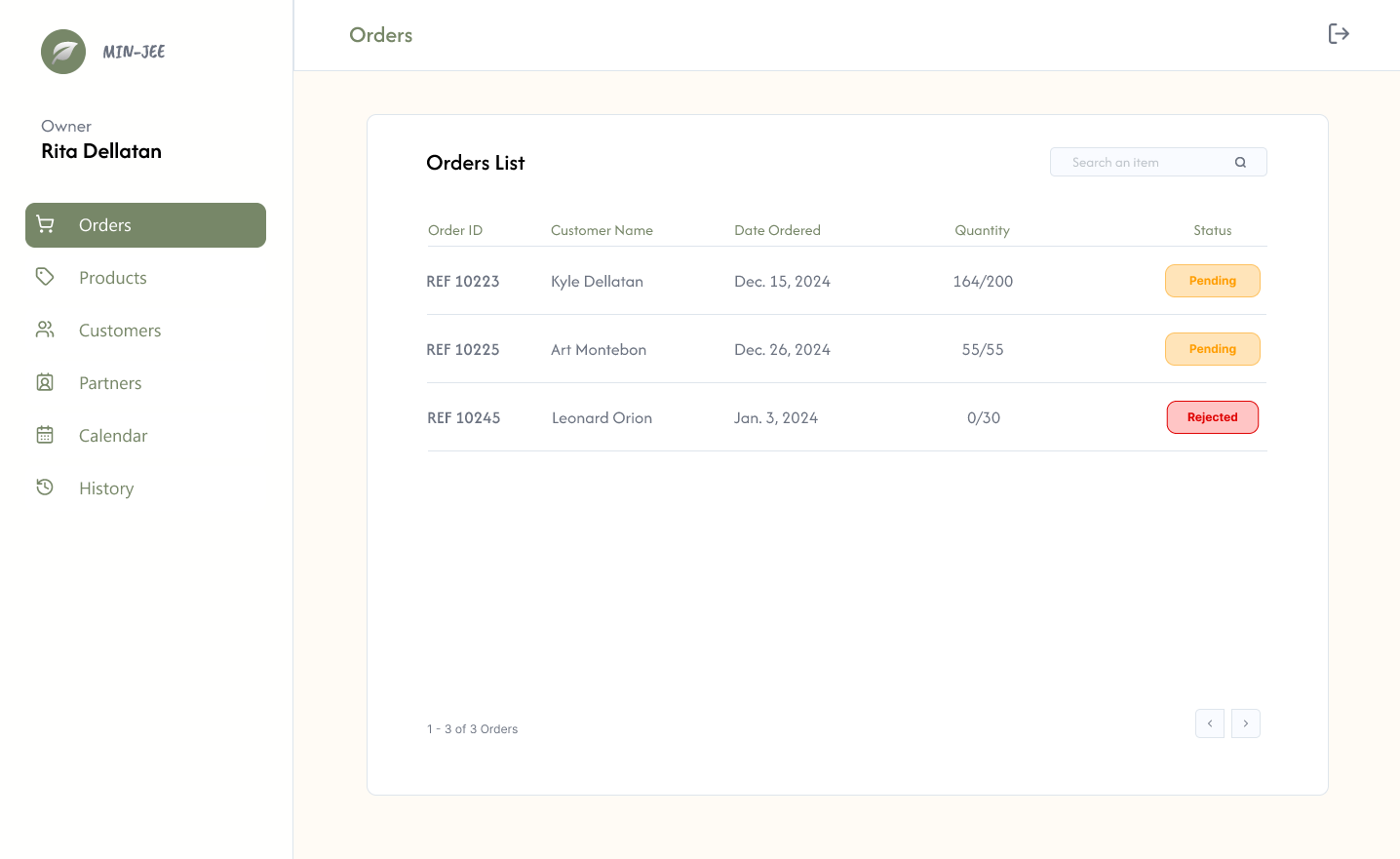
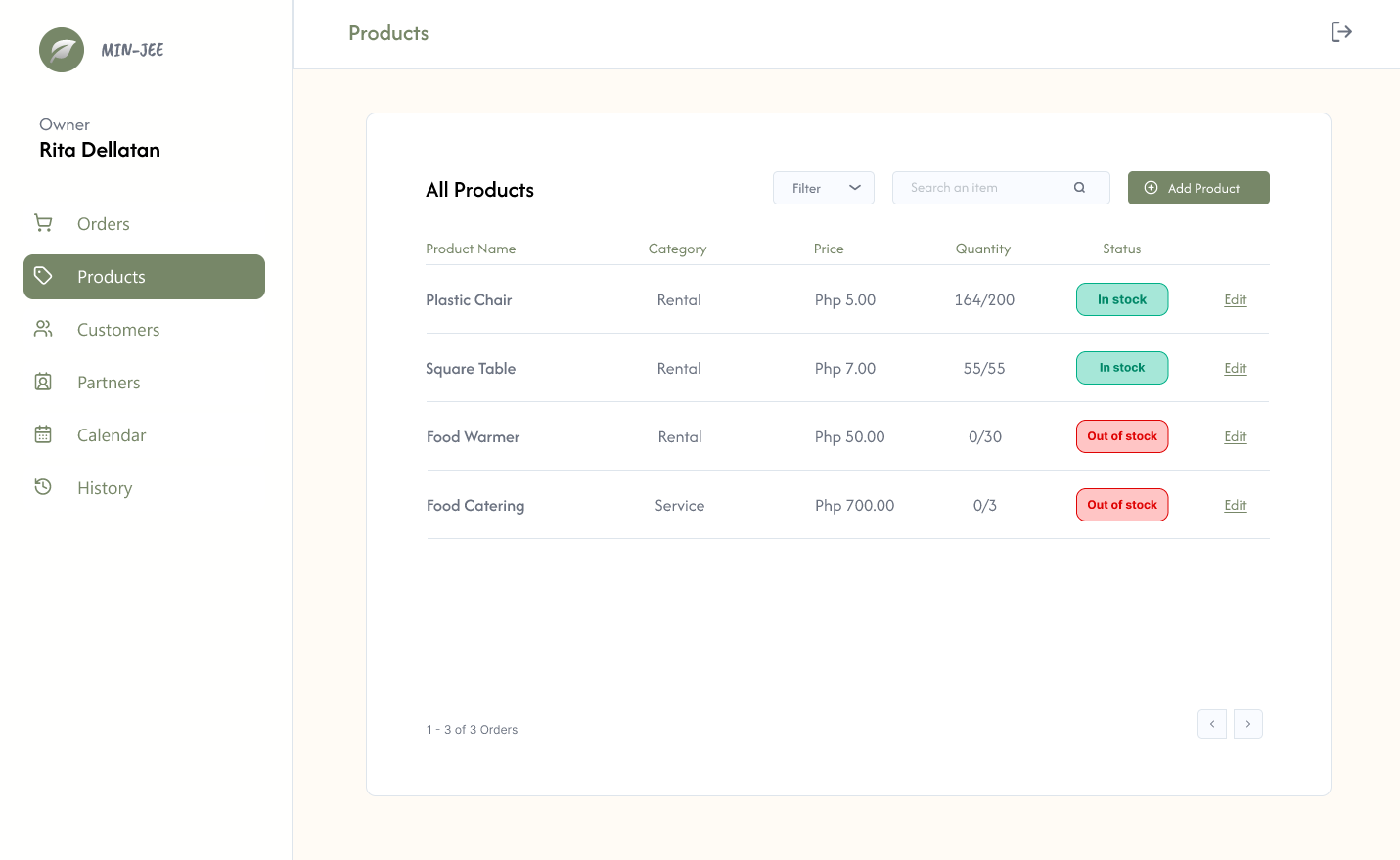
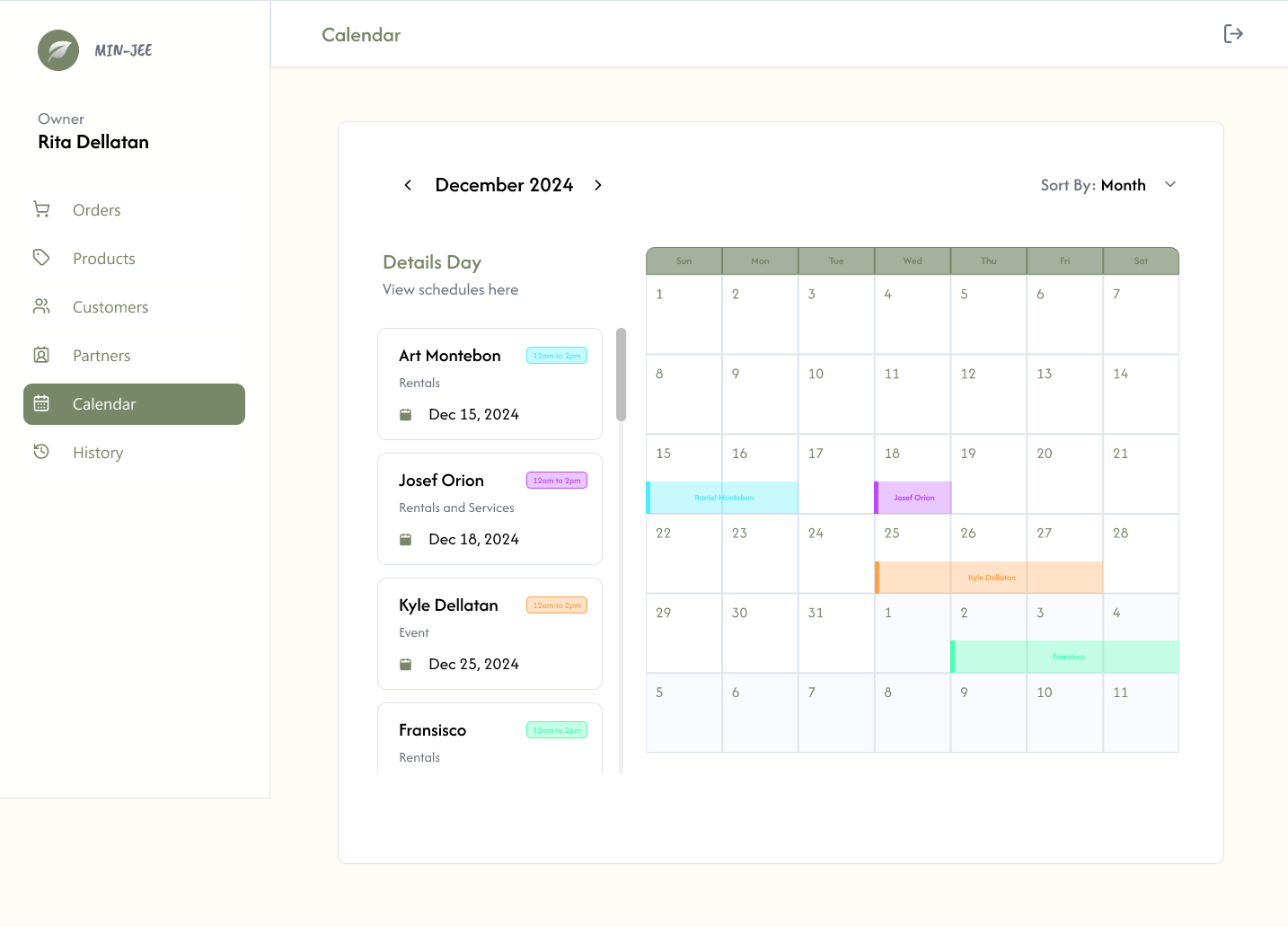
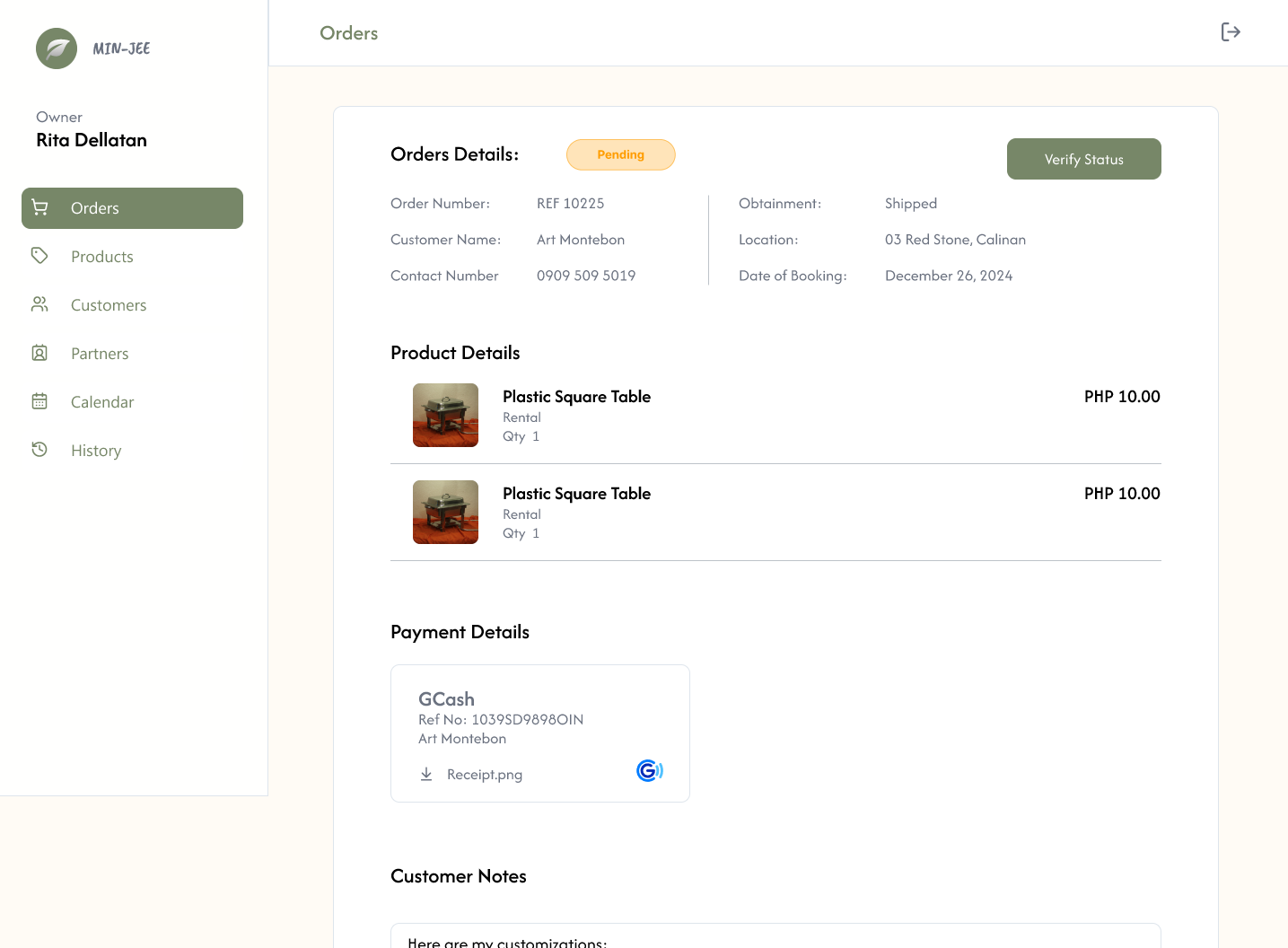
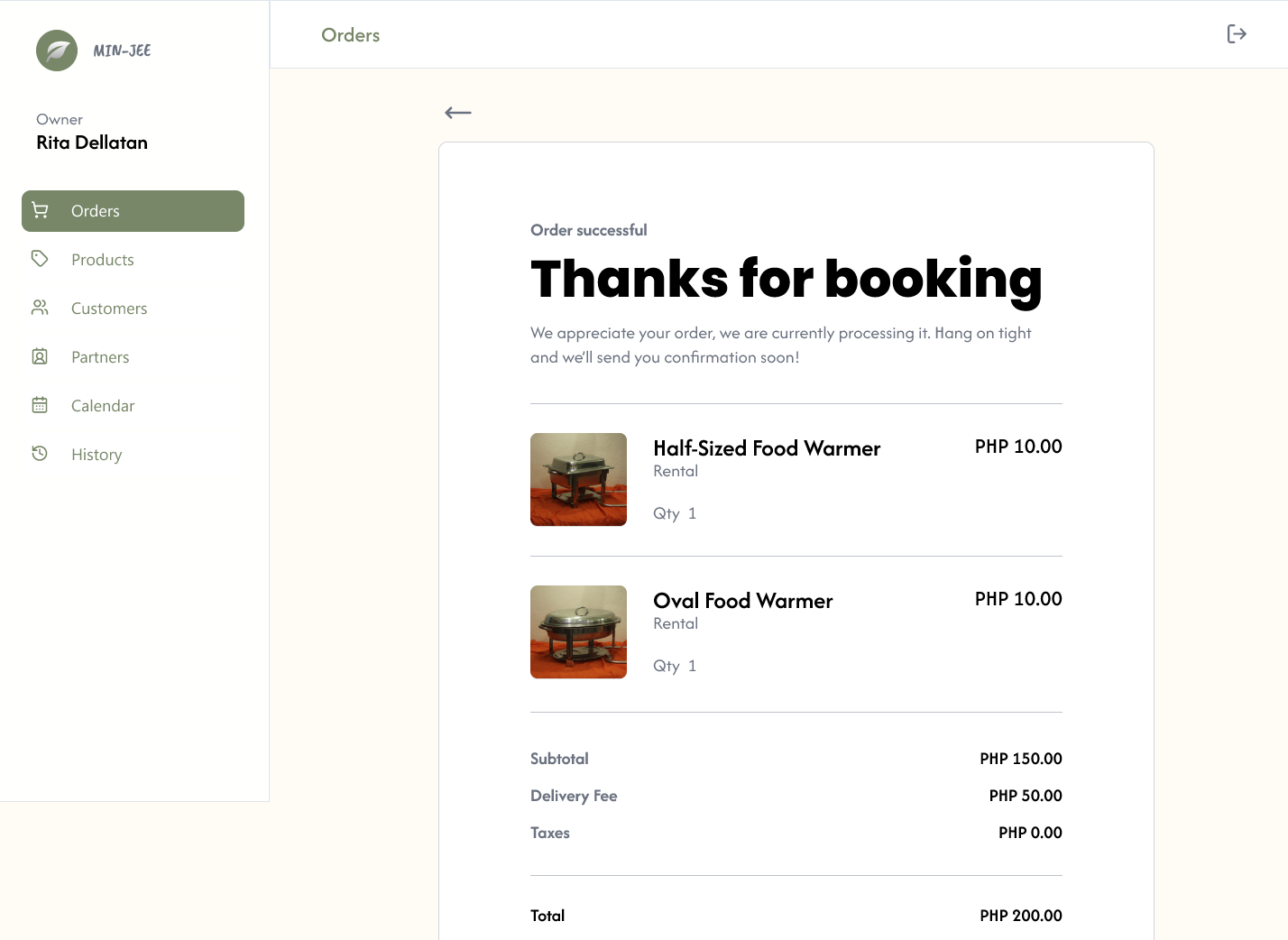
Min-Jee organises events of every scale and owns a warehouse of rentable party supplies — and at the time was run almost entirely by hand: customer records, orders, inventory, sales and logs all manual. The brief was concrete: eliminate the manual recording, add proper payment methods, separate admin and customer accounts, and introduce point-of-sale receipts.
02My role
I led development and worked full-stack:
- Backend endpoints covering authentication, business logic and edge-case handling, with improved error handling so failures surface cleanly.
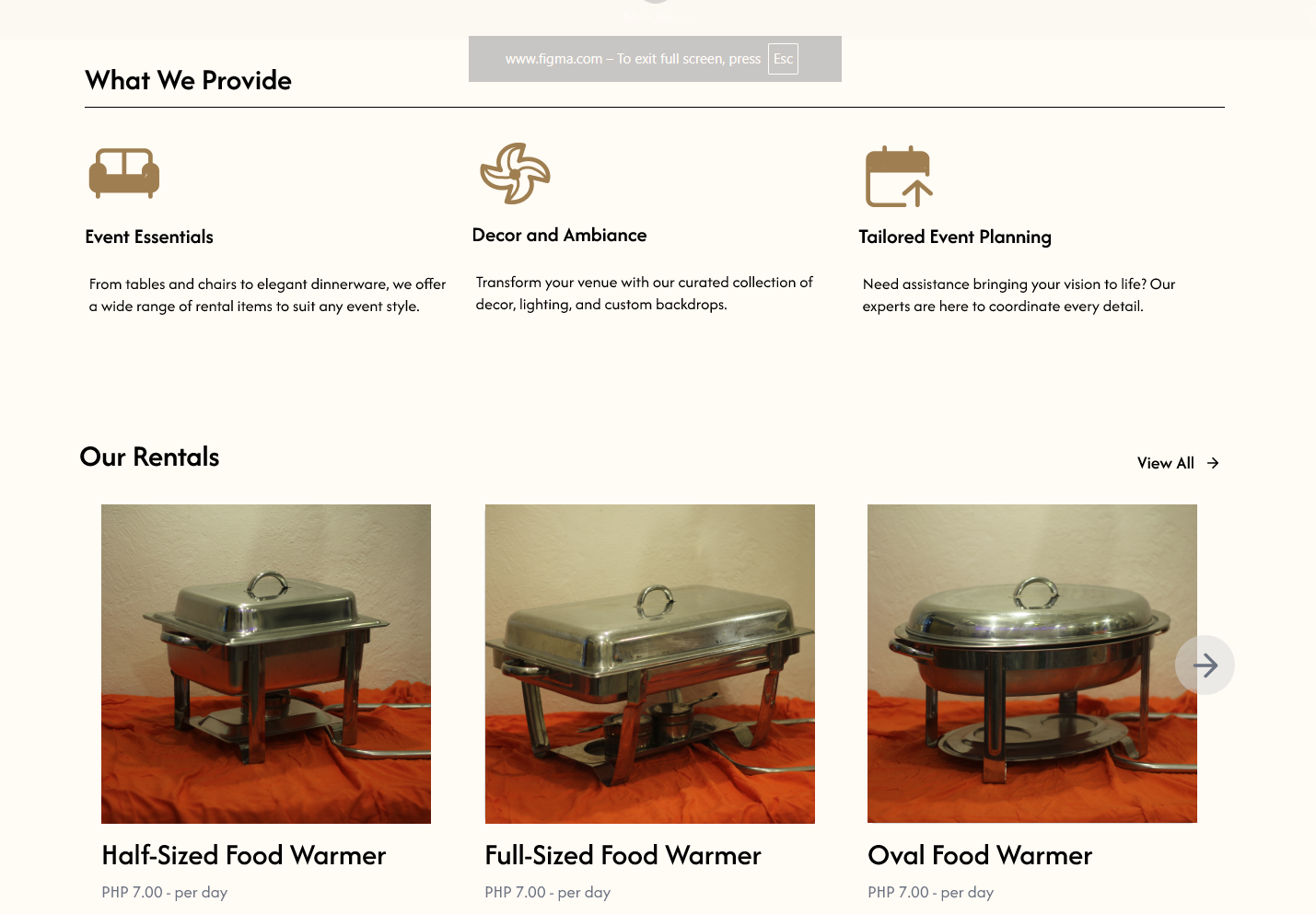
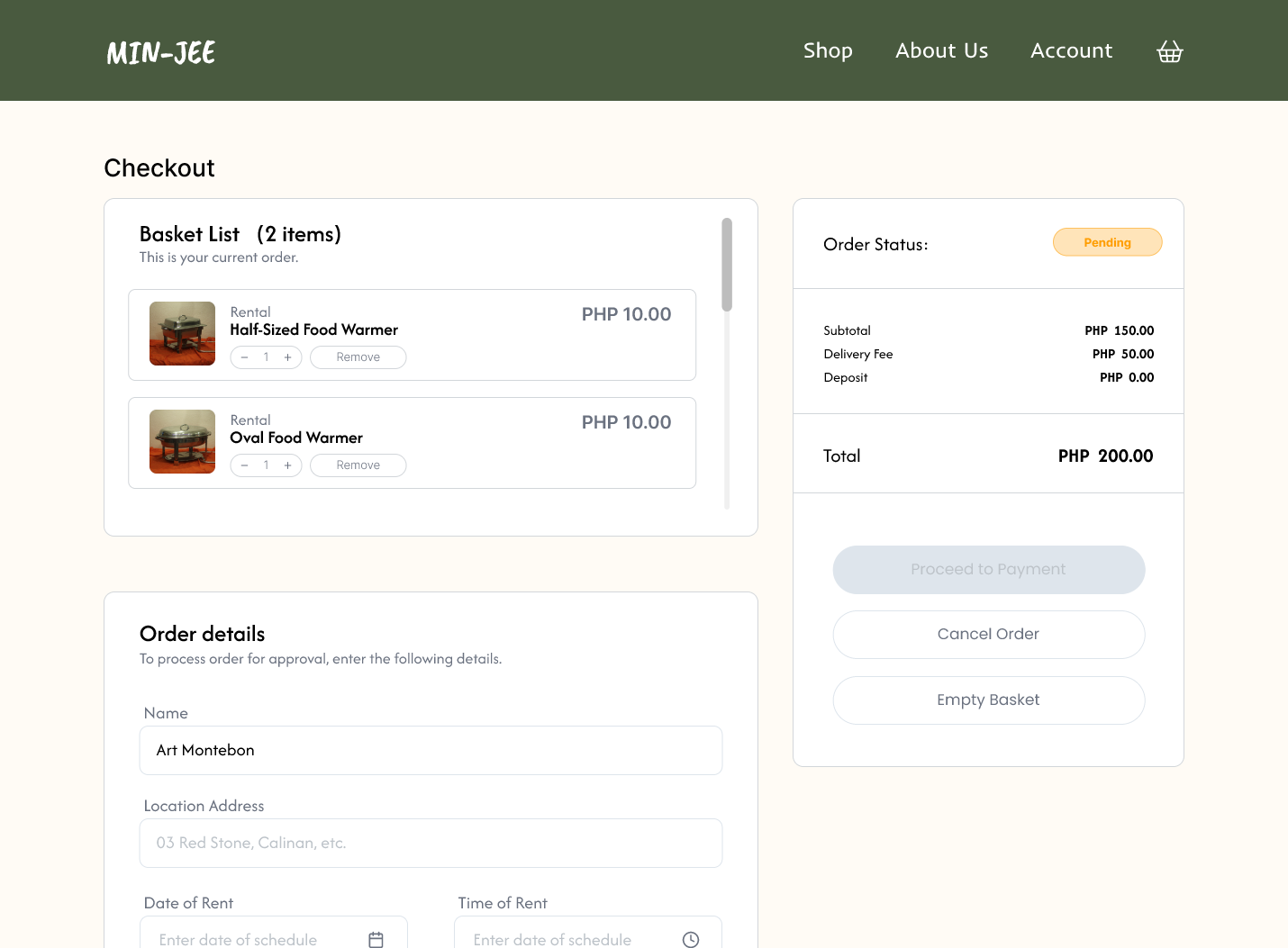
- Frontend modules including the rentals and point-of-sale systems, made responsive across screen sizes.
- Integration — reconciling the frontend/backend contract drift that surfaces once the two sides actually talk, with Axios + Redux Toolkit and Zustand.
- Containerised the FastAPI backend with Docker and built the CI/CD pipeline deploying it to AWS Lambda via ECR, automated through GitHub Actions.
03Architecture
A Next.js frontend talking to a FastAPI backend with Supabase behind it. The read side runs through Apollo GraphQL for a typed query layer; the rest goes through Axios. The more interesting half is the delivery path — the FastAPI backend is containerised and deployed to AWS Lambda as a container image through ECR, the whole cycle automated by GitHub Actions on push. A serverless backend that scales to zero when idle, with hands-off deployment.
Where I first learned the serverless toolchain hands-on — local container to automated push-to-deploy.
04What it demonstrates
Leading a real build for an actual business against real operational problems — end-to-end ownership across backend, frontend, the GraphQL data layer and the deployment pipeline, plus the integration judgment that only comes up when you're the one connecting the pieces.